
Battery Testing
The Importance of Battery Testing
Most backup power systems rely on batteries to provide enough electricity for reliable performance during outages.
With regular battery testing services, you can help prevent failures, removing any worry that your systems will not work when needed. KROON, a top battery testing company in Canada, offers services with strict standards that ensure your equipment is compliant, efficient, and ready to perform.
Backup power systems are needed in any business, and regular battery testing is a must to ensure yours is dependable. At KROON, we can help you ensure that your backup batteries are in the best condition so your business operations continuously receive power.
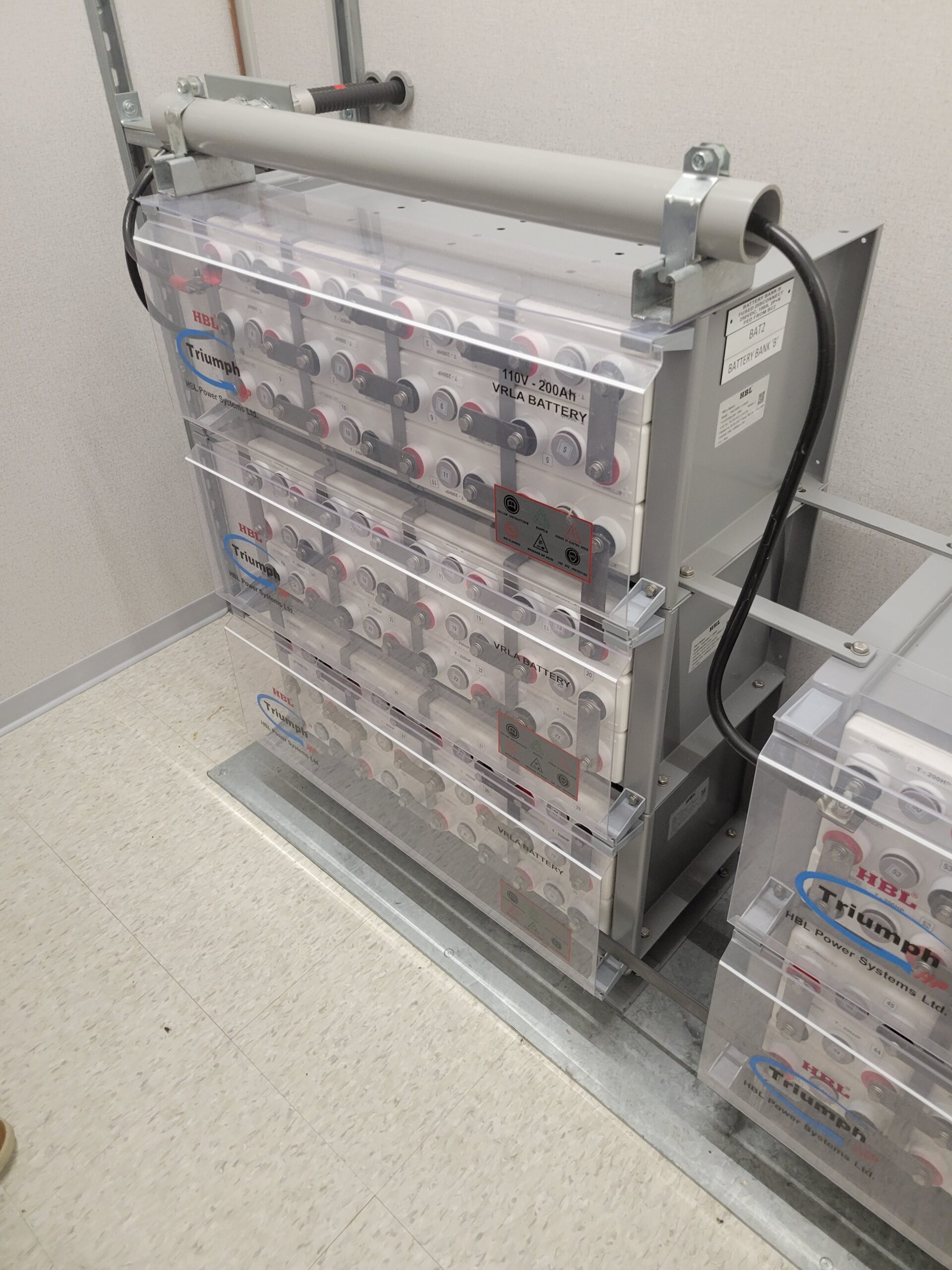
Our Approach to Battery Testing
We work following the CSA-Z462 and NFPA 70E Standard for Electrical Safety in the Workplace. At KROON, we carefully carry out, evaluate, and document every aspect of your battery’s performance and safety, ensuring it meets top industry standards.
From our services, you can expect:
- Tailored Services
- Safety and Compliance
- Thorough Evaluations
- Detailed Documentation
What is battery testing and why is it important?
Battery testing is the process of evaluating the condition, capacity, and performance of backup power batteries to ensure they will function reliably during an outage or emergency. Batteries degrade over time even when not in active use — regular testing identifies weakened cells, capacity loss, and potential failure points before they result in a backup power system failing at a critical moment.
What types of batteries does KROON test?
KROON provides battery testing services for a broad range of backup power battery types including UPS (uninterruptible power supply) batteries, VRLA (valve-regulated lead-acid) batteries, lithium-ion batteries, and other stationary battery systems used in commercial and industrial backup power applications.
What battery testing methods does KROON use?
KROON uses specialized testing equipment and procedures to evaluate battery performance, including capacity testing, impedance testing, load testing, and visual inspection. All testing is conducted in accordance with CSA Z462 and NFPA 70E standards for electrical safety in the workplace, with detailed documentation of findings provided after each assessment.
How often should backup batteries be tested?
Industry best practices and most manufacturers recommend annual battery testing at a minimum. For critical facilities such as data centers, hospitals, and industrial operations where backup power is essential, more frequent testing — semi-annually or quarterly — may be appropriate. KROON can assess your backup power requirements and recommend a testing frequency appropriate for your risk profile.
What happens if a battery fails testing?
If testing reveals that a battery or battery string has deteriorated beyond acceptable performance thresholds, KROON will provide a detailed report of the findings and recommend corrective action. This may include individual cell replacements, full battery string replacement, or system reconfiguration. Addressing failing batteries promptly prevents backup system failures during actual outages.
Does KROON provide documentation after battery testing?
Yes. KROON provides thorough documentation of all battery testing results including performance measurements, condition assessments, and recommendations. This documentation supports compliance requirements, insurance reviews, and long-term asset management planning through BCES IQ.
Where does KROON provide battery testing services?
KROON provides battery testing services throughout Quebec, and through its network of subsidiary companies, across the rest of Canada.
How do I arrange battery testing for my facility?
Contact KROON at 1-866-909-8344 or through the request form at kroon.ca. Our team will assess your backup power systems and schedule testing at a time that minimizes disruption to your operations.